


Silent Aspiration in the Elderly: The Hidden Killer Most Families Never See Coming (2026 Complete Guide)
Quick Answer: Silent aspiration occurs when food, liquid, or saliva enters the lungs without triggering a cough — meaning seniors and their caregivers often have no idea it's happening. Research shows 71% of elderly patients with community-acquired pneumonia silently aspirate during sleep, and silent aspiration patients have 2.65x higher mortality than those without it. Among elderly hospitalized for pneumonia, 91.7% have dysphagia and over 50% experience silent aspiration. Watch for: wet/gurgly voice after meals, recurrent unexplained pneumonia, weight loss, frequent throat clearing. The NovaCare Anti-Choking Device ($63.98) is Bureau Veritas Tested Class II and Bureau Veritas tested — designed for senior self-rescue when silent aspiration progresses to complete obstruction. Both documented senior self-rescues (Save #156, Save #162) occurred when silent symptoms suddenly became life-threatening choking.
Of all the dangers facing aging Americans, silent aspiration is the one almost nobody talks about — including most primary care doctors. It happens daily in millions of senior households. It causes more deaths than house fires, drowning, and accidental poisoning combined. And the worst part? Most seniors who develop it never know.
This guide answers the questions families need to understand silent aspiration before it becomes the reason for an emergency room visit — or worse.
Section 1: What is Silent Aspiration? (5 Questions)
Q1: What exactly is silent aspiration?
Silent aspiration is when food, liquid, or saliva enters the airway and lungs without triggering a cough or visible distress. Unlike normal choking — where the body's protective reflexes immediately try to expel the foreign material — silent aspiration bypasses these defenses entirely. The senior may continue eating, talking, or sleeping with no awareness that material has entered their lungs.
According to the National Institute of Health (NCBI), silent aspiration is "an invisible killer" because pneumonia caused by it is much higher than overt aspiration. The body simply doesn't sound the alarm.
Q2: How is silent aspiration different from regular choking?
Regular choking is dramatic: clutched throat, panicked eyes, inability to breathe, immediate distress. Silent aspiration is invisible. The senior may finish their meal, watch TV, go to bed — and develop pneumonia 48 hours later from material in their lungs they never knew was there.
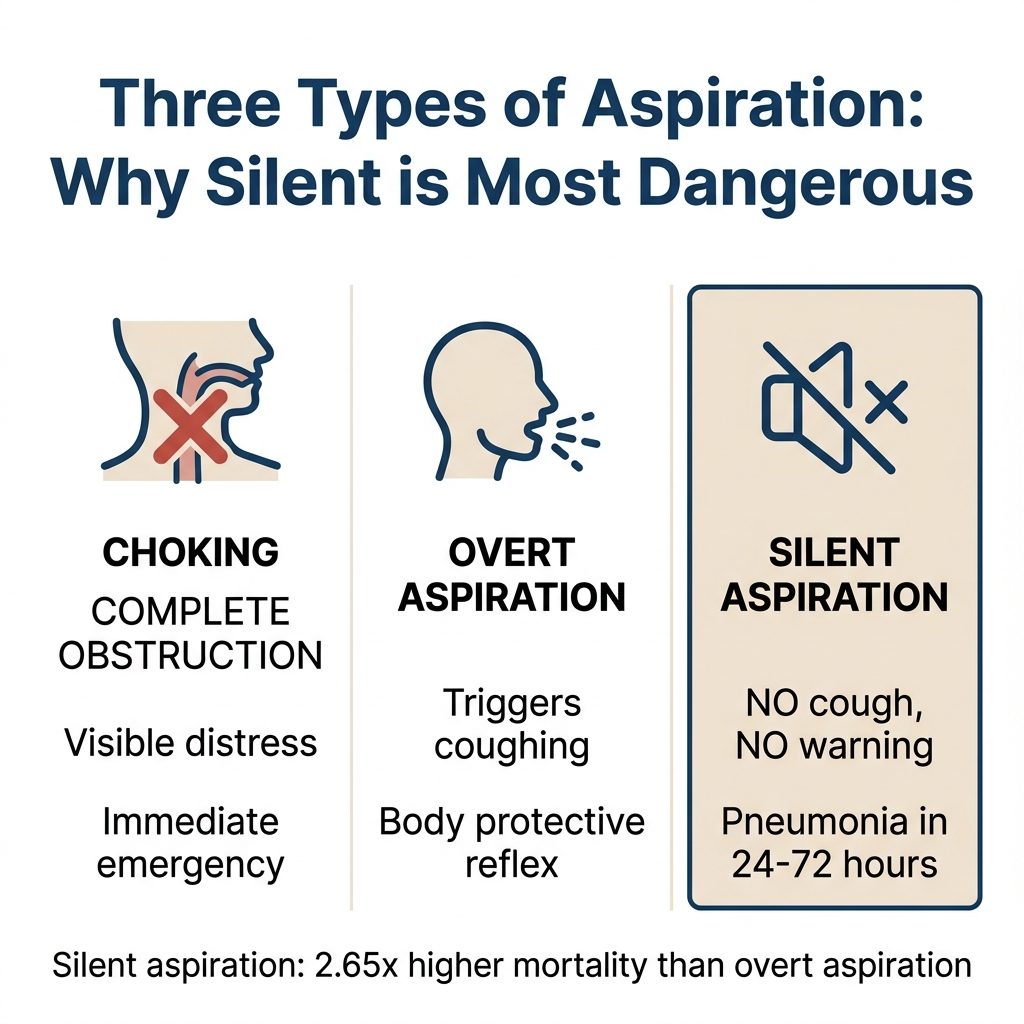
Three key differences:
- Choking: Complete airway obstruction → immediate emergency
- Overt aspiration: Some material enters airway → triggers coughing
- Silent aspiration: Material enters airway → no cough, no warning, no symptoms
The progression often goes: silent aspiration episodes → repeated lung exposure → aspiration pneumonia → hospitalization → potentially death.
Q3: How common is silent aspiration in seniors?
More common than most families imagine. Per peer-reviewed research:
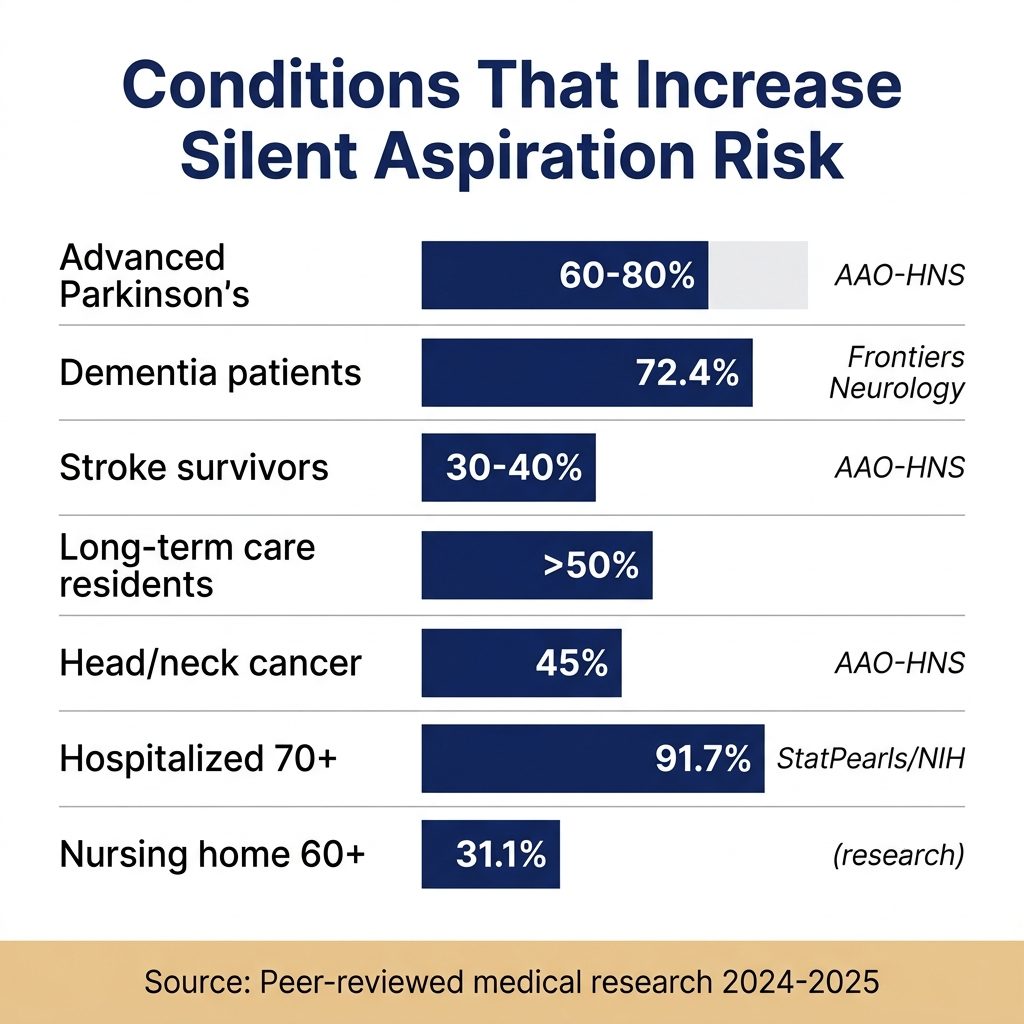
- 71% of elderly with community-acquired pneumonia silently aspirate during sleep (Kikuchi et al., American Journal of Respiratory and Critical Care Medicine)
- 91.7% of patients aged 70+ hospitalized with pneumonia have dysphagia (StatPearls/NIH 2024)
- Over 50% of dysphagia patients experience silent aspirations
- 72.4% of dementia patients have dysphagia (Frontiers in Neurology 2025)
- 31.1% of nursing home residents 60+ have dysphagia leading to aspiration risk
The condition is often discovered only after pneumonia develops — by which point treatment becomes urgent.
Q4: Is silent aspiration the same as regular aspiration?
No — and the difference matters enormously. Aspiration broadly means inhaling foreign material into the lungs. It can be:
- Macroaspiration: Larger volumes, often visible (someone coughing during meal)
- Microaspiration: Small amounts, frequent, often during sleep
- Silent aspiration: Either type, but without triggering cough reflex
Silent aspiration is the most dangerous because there's no warning signal. The senior continues normal activities while pathogenic material accumulates in their lungs.
Q5: What's the connection between silent aspiration and pneumonia?
This is the critical link most families miss. 58.2% of aspiration pneumonia cases in acute hospitals are caused by silent aspiration (per peer-reviewed research published in Frontiers in Neurology, 2025). And aspiration pneumonia in the elderly carries a 21% 30-day mortality rate.
The progression:
- Senior silently aspirates small amounts of saliva, food particles, or liquid
- Bacteria from oral cavity enter lungs (especially significant if dental hygiene is poor)
- Lung tissue becomes inflamed and infected
- Aspiration pneumonia develops within 24-72 hours
- Hospitalization may be required
- 30-day mortality risk: 21%
This is why silent aspiration is described in medical literature as "an invisible killer."
Section 2: Who Is at Highest Risk? (5 Questions)
Q6: Which seniors are most at risk for silent aspiration?
The highest-risk groups, per research:
| Condition | Silent Aspiration Risk |
|---|---|
| Stroke survivors | 30-40% have dysphagia → high silent aspiration risk |
| Advanced Parkinson's | 60-80% have dysphagia (highest correlation) |
| Dementia patients | 72.4% have dysphagia |
| Long-term care residents | Over 50% have dysphagia |
| Head/neck cancer survivors | Up to 45% have chronic dysphagia |
| Multiple sclerosis | Common complication |
| Huntington's disease | Common complication |
Q7: Why do seniors lose the cough reflex?
The cough reflex is mediated by neurotransmitter substance P released from nerve endings in the throat. With aging — especially with neurological conditions — substance P release diminishes, and the swallowing/cough reflex becomes blunted.
Per peer-reviewed research, in elderly with repeated pneumonia, cough reflex sensitivity is more than 10x lower than in non-pneumonia elderly. Lacunar infarction (small strokes in the basal ganglia) further suppresses these protective reflexes — meaning many seniors with no obvious neurological diagnosis still have impaired protection.
Q8: Are certain medications increasing silent aspiration risk?
Yes — significantly. Medications affecting silent aspiration risk include:
- Sedatives and sleep aids — Reduce protective reflexes during night
- Antipsychotics — Affect swallowing coordination (highest correlation: schizophrenia 2.66% choking death rate per CDC)
- Anticholinergics — Cause dry mouth (impairs safe swallowing)
- Opioid pain medications — Reduce cough reflex
- Some Parkinson's medications — Affect motor coordination
- Antihistamines — Cause dryness
If your senior loved one takes any of these and has any swallowing concerns, discuss with their doctor.
Q9: Does living alone increase silent aspiration risk?
Living alone doesn't directly cause silent aspiration — but it dramatically affects outcomes. Without a witness:
- Early signs go unrecognized
- Patterns aren't noticed
- Wet voice changes aren't tracked
- Mild aspiration pneumonia may be mistaken for "just feeling tired"
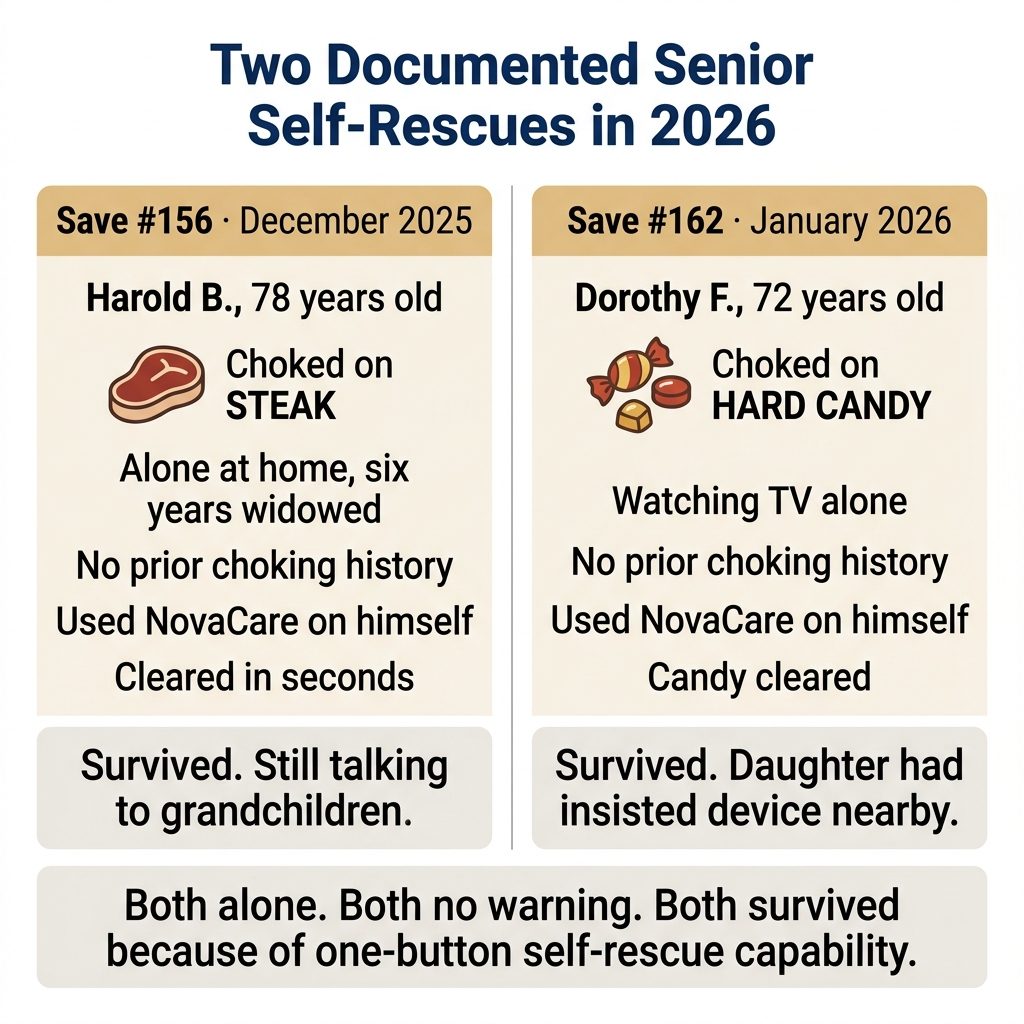
For seniors who live alone, regular phone or video check-ins with adult children or caregivers — especially during/after meals — can help catch early warning signs. Save #156 (Harold B., 78) and Save #162 (Dorothy F., 72) both lived alone — and both had progressed from likely silent aspiration episodes to complete obstruction emergencies before being saved.
Q10: How do nursing homes contribute to silent aspiration risk?
Despite professional staffing, nursing homes have unique challenges:
- Mealtime supervision — Staff may serve multiple residents simultaneously
- Texture errors — Wrong food texture given to dysphagia patients
- Rushed meals — Time pressure leads to faster eating
- Position errors — Resident not sitting fully upright
- Communication gaps — Speech-language pathologist recommendations not followed by caregivers
Per nursing home research, choking and aspiration pneumonia are among the top three preventable causes of death in long-term care facilities.
Section 3: Silent Warning Signs Caregivers Often Miss (5 Questions)
Q11: What are the 7 silent warning signs of aspiration?
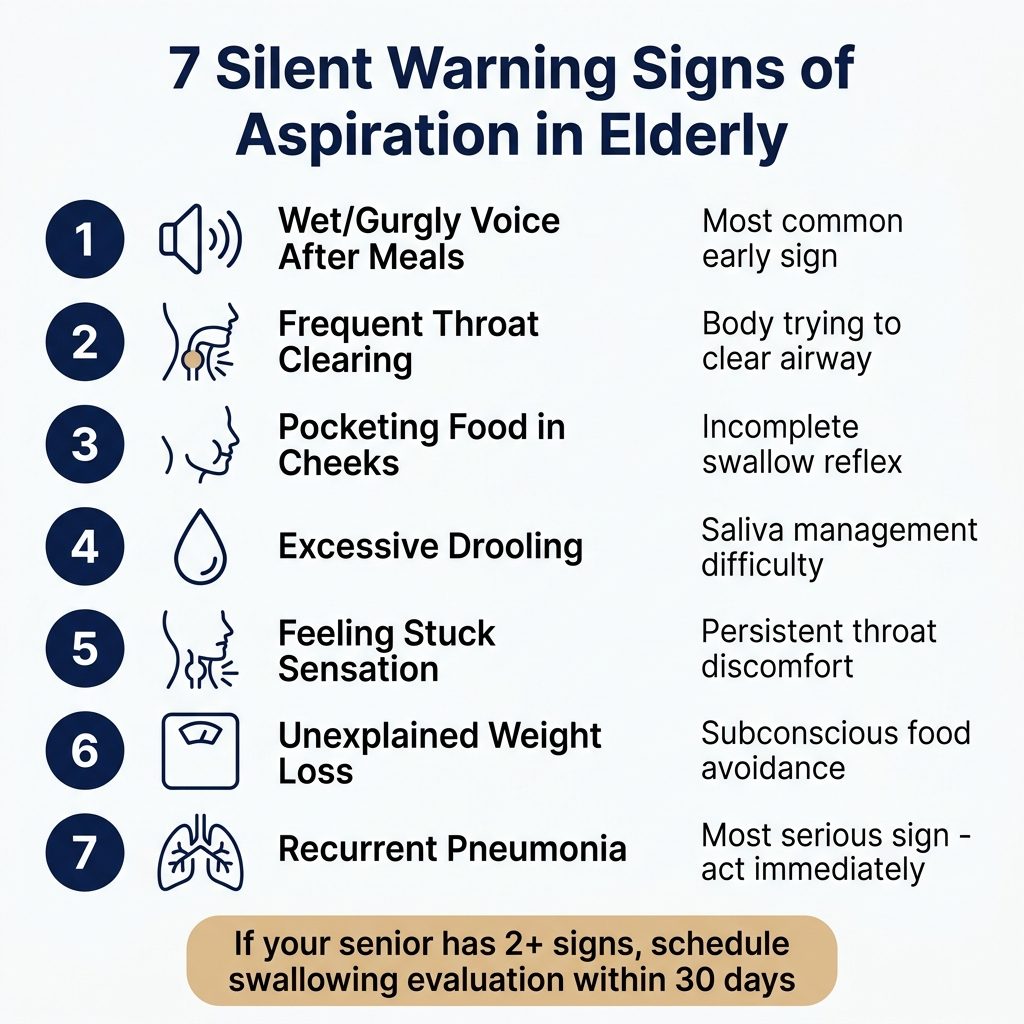
These are the subtle changes that caregivers and adult children should watch for:
- Wet or gurgly voice after meals or drinking water
- Frequent throat clearing during or after eating
- Pocketing food in cheeks (not fully swallowing)
- Drooling or saliva management difficulties
- Persistent feeling of "something stuck in my throat"
- Changes in breathing patterns after meals (slight wheezing, breathlessness)
- Recurrent unexplained pneumonia (especially repeated chest infections)
Read our complete guide on signs of choking and recognition for more detail.
Q12: Why is unexplained weight loss a key warning sign?
Seniors with silent aspiration often subconsciously avoid foods that feel "difficult" — even if they can't articulate why. Over months, this can lead to:
- Reduced food variety
- Lower caloric intake
- Avoidance of meat, raw vegetables, hard foods
- Gradual unintentional weight loss
If a senior has lost 5+ pounds in 6 months without dieting, swallowing evaluation should be considered. Weight loss is often the first measurable symptom of progressive dysphagia.
Q13: My parent says food gets "stuck" but coughs it out — is that aspiration?
This is actually better than silent aspiration in one important way: the cough reflex is still functional. But it indicates dysphagia. Action steps:
- Schedule swallowing evaluation with speech-language pathologist
- Modify food textures (smaller pieces, softer textures)
- Sit fully upright during meals
- Take time, no rushing
- Have an anti-choking device within arm's reach
This is a window of opportunity to address the issue before silent aspiration develops.
Q14: Can silent aspiration progress to choking emergency?
Yes — and this is the critical concern for senior safety. Many seniors with silent aspiration episodes don't have a complete obstruction emergency for years. But when one occurs, it's often:
- Sudden: No warning before complete blockage
- Severe: Larger food piece blocking airway
- Solo: Often happens when alone (eating distracted, watching TV)
Save #156 documented Harold B. (78) eating his usual Tuesday steak — same dinner he'd had for years. He had no prior choking incidents. A piece of steak silently went the wrong way. He was alone. He used NovaCare on himself. Save #162 documented Dorothy F. (72) eating hard candy alone watching TV. Same situation — no prior choking history, sudden complete obstruction.
The lesson: Silent aspiration history doesn't guarantee future obstruction won't happen. Equipment matters.
Q15: How quickly should I act on warning signs?
If you notice ANY of these in your senior loved one, schedule a swallowing evaluation within 30 days:
- Wet/gurgly voice after meals (any frequency)
- 2+ episodes of unexplained pneumonia in a year
- Weight loss over 5 lbs in 6 months
- Avoidance of multiple food categories
- Any choking incident, no matter how minor
Do NOT wait until a complete emergency. Early intervention can prevent catastrophic outcomes.
Section 4: Diagnosis & Medical Evaluation (5 Questions)
Q16: How is silent aspiration diagnosed?
Several diagnostic methods are used:
- Modified Barium Swallow Study (MBSS) — Most common; X-ray observation while swallowing barium-containing food
- Fiberoptic Endoscopic Evaluation of Swallowing (FEES) — Camera through nose observes swallow
- Cough Latency Test — Measures cough reflex sensitivity to citric acid mist
- Clinical Swallowing Examination — Bedside assessment by speech-language pathologist
The cough latency test is particularly useful for silent aspiration — it identifies seniors whose cough reflex has weakened beyond normal aging.
Q17: Should I push for swallowing evaluation if my parent has had pneumonia?
Yes — strongly recommended. Here's why:
- Aspiration pneumonia causes most senior pneumonia (5-15% of US cases overall, 60-90% in some Japanese studies for elderly)
- If your parent had pneumonia, silent aspiration is a likely cause
- Without addressing the underlying cause, recurrence risk is high
- Each pneumonia episode increases mortality risk
Ask the doctor specifically: "Could this have been aspiration pneumonia?" Most primary care doctors won't suggest this evaluation unless asked.
Q18: What does treatment look like?
Treatment is multifaceted:
- Swallowing therapy — Targeted exercises to strengthen muscles
- Diet texture modification — Pureed, minced, or soft foods
- Liquid thickening — Thickened liquids reduce aspiration risk
- Postural adjustments — Chin tuck, side feeding, head turn
- Oral hygiene — Reducing bacteria in mouth (critical for pneumonia prevention)
- Medication review — Adjusting drugs that affect swallowing
For severe cases, feeding tubes may be considered — though this is increasingly recognized as not always improving outcomes.
Q19: Can a senior recover from chronic silent aspiration?
Many seniors significantly improve with proper intervention. Per research:
- Swallowing therapy can strengthen relevant muscles
- Diet modifications reduce aspiration events by 60-80%
- Oral hygiene improvements reduce pneumonia risk significantly
- Cough reflex training shows promise (still being researched)
However, in advanced neurological conditions (advanced Parkinson's, advanced dementia), management is the goal rather than full recovery.
Q20: When should we consider end-of-life decisions?
This is the conversation no family wants to have, but should consider when:
- Multiple aspiration pneumonia episodes despite intervention
- Advanced dementia with severe dysphagia
- Senior expressing they don't want aggressive intervention
- Quality of life severely impacted
Many families find peace knowing they tried prevention thoroughly. Equipment like an anti-choking device gives every senior — and every family — the maximum window of opportunity to act.
Section 5: Prevention Strategies (5 Questions)
Q21: What's the single most effective prevention strategy?
Multiple research studies converge on one answer: improved oral hygiene reduces aspiration pneumonia by 50-70%.
The mechanism: Silent aspiration of small amounts of saliva is universal in seniors. The pathogenic load (bacteria) in that saliva determines whether it causes pneumonia. Reducing bacteria reduces pneumonia.
Action steps:
- Twice-daily teeth brushing (or denture cleaning)
- Daily flossing
- Regular dental cleanings (every 6 months)
- Address dental decay promptly
- Antiseptic mouthwash if recommended
Q22: What dietary changes help?
Recommended modifications:
- Smaller bites — Pinky-fingernail size pieces
- Softer textures — Cooked vegetables instead of raw
- Avoid sticky foods — Peanut butter, marshmallows, white bread
- Avoid mixed textures — Soup with chunks (smooth or chunky, not both)
- Thicken thin liquids — If recommended by SLP
- Cut meat very small — Especially steak, chicken
- Avoid high-risk foods — Hard candy, popcorn, whole nuts
Q23: How important is meal posture?
Critically important. The proper position:
- Sitting fully upright at 90 degrees
- Not reclined in bed or recliner
- Stay upright 30 minutes after meal
- Tuck chin slightly when swallowing (helps redirect food)
- Turn head to weaker side for stroke survivors
For seniors who eat in bed (often after surgery or with limited mobility), elevating head of bed to at least 30 degrees during/after meals is essential.
Q24: Should every senior household have an anti-choking device?
Yes — particularly for seniors with any silent aspiration risk factors. The device serves two critical functions:
- Emergency response when silent aspiration progresses to complete obstruction
- Self-rescue capability when the senior is alone
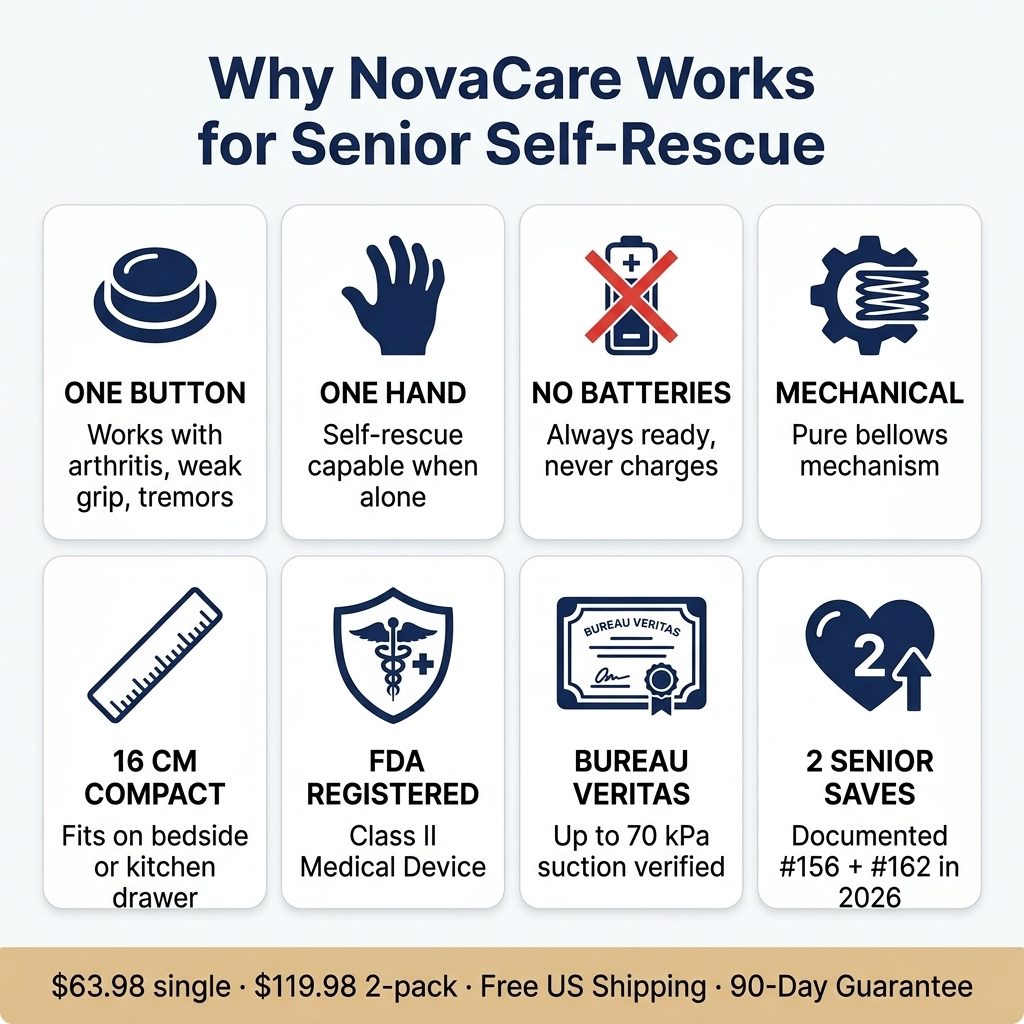
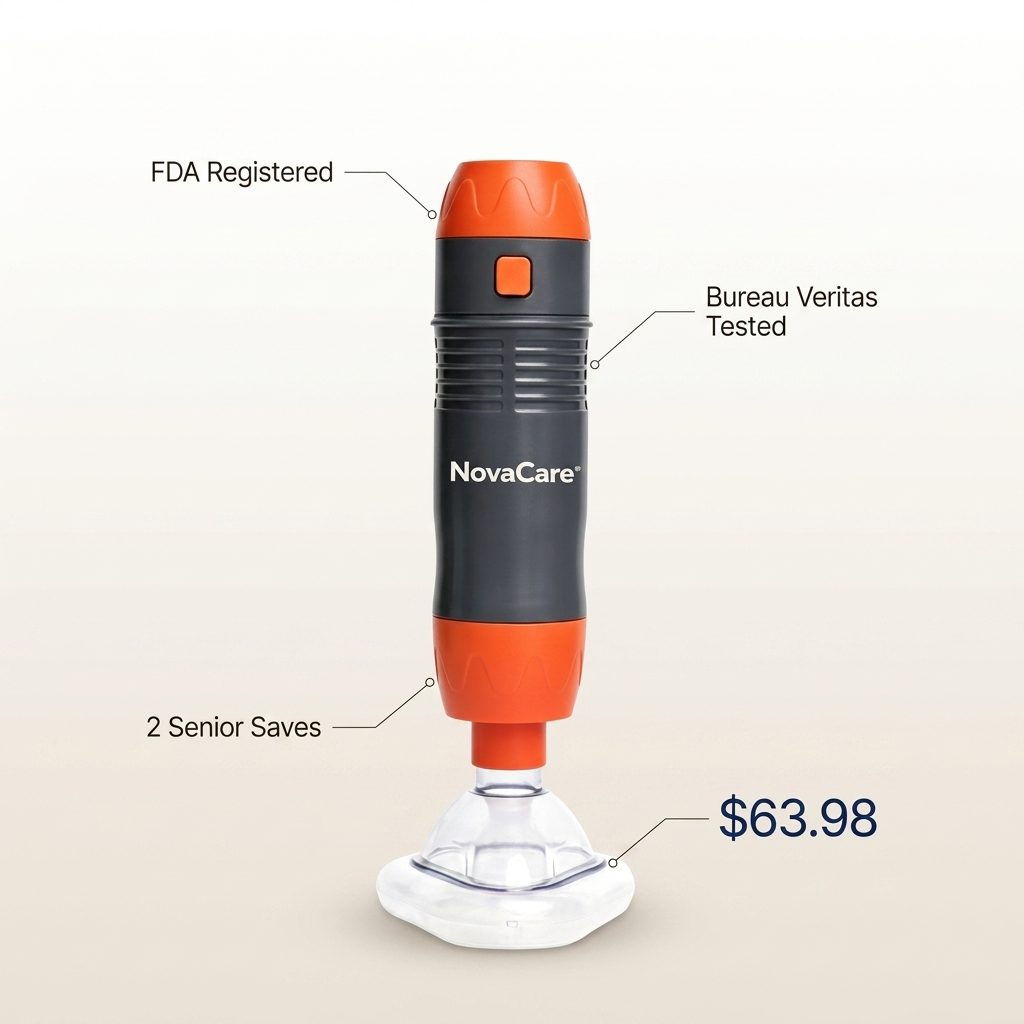
NovaCare ($63.98) is specifically designed for senior use:
- One button (works with arthritis, tremors, weakness)
- One hand (self-rescue capable)
- Mechanical (no batteries, always ready)
- Compact (16 cm — fits in kitchen drawer or bedside)
- Bureau Veritas Tested Medical Device
- Bureau Veritas tested (Report BV2500728QN7119)
- 2 documented senior self-rescues in 2026
Q25: How do I have this conversation with my parent?
The conversation is hard because it confronts mortality. Approach:
- Frame as preparedness, not weakness — "Like a smoke detector"
- Use real save examples — Save #156 and #162 are powerful (real people, just like your parent)
- Explain silent aspiration is invisible — Most seniors didn't know they had it
- Make it concrete — Show them the device, demonstrate how easy it is
- Address concerns about being a burden — Equipment lets them stay independent longer
Many seniors actually feel relieved when family takes preventive steps — it acknowledges a fear they've quietly carried for years.
The Bridge from Silent Aspiration to Emergency: Why Equipment Matters
Both documented NovaCare senior self-rescues had something important in common: neither senior had a known dysphagia diagnosis.
Save #156 — Harold B., 78. Widower. Had eaten the same Tuesday-night dinner (small ribeye steak) for six years. Always cut it small. Always chewed slowly. After all those Tuesdays, he'd stopped thinking about choking.
Then one Tuesday, a piece — no larger than a dime — went the wrong way. He couldn't cough. He couldn't speak. He had four minutes. He used the NovaCare device his daughter had mailed him for Christmas — sitting in his kitchen drawer for 10 weeks. He pressed the button with one hand. The steak came out. He sat on the floor, shaking, and breathed.
Save #162 — Dorothy F., 72. Widow. Watching TV alone with hard candy. Same situation: no choking history, sudden complete obstruction, alone. Used NovaCare on herself. Survived.
The lesson: Silent aspiration history (or even no history at all) doesn't predict who will face a sudden complete obstruction emergency. Equipment matters because the timing is unpredictable.
For Adult Children: A Letter to You
If you're reading this, you've probably noticed something — your parent's voice sounds wet after dinner. They've had two pneumonia hospitalizations this year. They've lost weight. They cough more during meals than they used to.
You're not imagining it. These are real warning signs.
Silent aspiration is the most under-diagnosed condition in elderly care. Most primary care doctors won't suggest evaluation. Most seniors won't ask for one. By the time it's recognized, pneumonia is often present.
Here's what you can do:
- Call your parent's doctor — Specifically request swallowing evaluation
- Equip their home — Anti-choking device in kitchen + bedside
- Improve oral hygiene — This alone reduces pneumonia risk 50-70%
- Modify their meals — Smaller bites, softer textures, upright posture
- Schedule check-ins — Phone or video during/after meals
The phone call you don't want is: "Your father aspirated last night. He's in the ICU."
The phone call you'll be glad you got is: "Mom called this morning. She had a choking moment last night, used the device, and she's fine."
The difference is one purchase. $63.98. Free shipping.
→ Get NovaCare for Your Parent — $63.98 single · $119.98 2-pack
The 2-pack covers their kitchen + bedside, OR their home + your home for visits.
The Bottom Line
Silent aspiration is the most preventable senior emergency that almost nobody is talking about. Your senior loved one's wet voice after dinner isn't a quirk — it's a signal. Their recent pneumonia wasn't bad luck — it was likely aspiration. Their weight loss isn't aging — it might be subconscious food avoidance.
The good news: you can act today. A swallowing evaluation, oral hygiene improvement, dietary modification, and emergency equipment together reduce risk dramatically.
- ✅ Bureau Veritas Tested Medical Device
- ✅ Bureau Veritas Tested (Report BV2500728QN7119)
- ✅ 20 documented saves in 2026
- ✅ 2 senior self-rescues (#156, #162)
- ✅ 70 kPa Medical-Grade Suction (Independently Verified)
- ✅ IP65 Rated (Dust & Water Resistant)
- ✅ CE & UKCA Certified
- ✅ Reusable Design (Not Single-Use)
- ✅ Mechanical One-Button (No Batteries)
- ✅ Self-Rescue Capable
- ✅ $63.98 single · $119.98 2-pack
- ✅ Free US Shipping
- ✅ 90-Day Money-Back Guarantee
→ Get NovaCare at novacareus.com
📖 Related: Anti-Choking Device for Seniors: 30 Questions Answered
📖 Related: Anti-Choking Device for Parkinson's Patients
📖 Related: NovaCare 2026 Year One Lives Saved Report
📖 Related: Signs of Choking: How to Recognize It in 5 Seconds
📖 Read all saves: NovaCare Life Saved Stories